
AUDIT GUIDE 11: Preparing, Approving, and Distributing the Audit Report
1000+
Successful Projects
10+ Years
Industry Experience
Worldwide
Certification Services
24/7 Support
Expert Consultation

Effective audits are the backbone of organizational transparency, compliance, and continual improvement. From collecting and verifying evidence to preparing detailed reports and conducting follow-ups, every step ensures that audit findings are accurate, actionable, and reliable.
Learn how structured audit processes, including reporting, NCR management, and final close-out, enhance performance and strengthen trust in your organization. Visit our blog to know about Audit Findings and Meeting process.
Table of Contents
Preparing the Audit Report
- A report is not a lecture for entertainment; its purpose is to inform the reader about the status of an organization’s systems and processes, their performance, weaknesses, risks, and effectiveness, and to provide a clear and concise picture.
- Based on audit reports, decisions are made, actions are taken, and confidence is provided where activities are running well.
- Provided the writer has prepared well, the writing of a report should not be difficult. The essence is to supply the reader with the maximum amount of information in the shortest possible form.
- To provide a clear picture, an audit report should be built systematically and guide the reader through the audit findings, conclusions, and recommendations.
- The auditor must consider the auditee’s knowledge and understanding of the audit process, as well as their background related to the subject audited.
Golden Rules of Report Writing
- Use short sentences.
- Do not confuse facts with conclusions.
- Never lengthen a report in the hope of impressing the reader.
- State conclusions from facts; do not rely on the reader to draw conclusions.
- When deciding what to include in the report, consider:
- Who the reader is
- Why the information is needed
- How much the reader already knows
- How the reader is going to use the information
- Write the report in the passive tense.
- Do not use long words where short ones will do.
- Be precise and plain in describing things.
- Always assume the reader is busy and wants information clearly and quickly.
- Include pictures, graphs, and tables where they are useful.
- Do not leave room for misinterpretation.
- Be careful when using technical terms and abbreviations unless they are very commonly used and well understood by the reader.
- Review the report carefully, or preferably have it reviewed by someone else before issuing it.
Refer our blog on Management System Auditor Competence.
Responsibility for the Audit Report
The audit team leader is responsible for the preparation and content of the audit report.
Mandatory Contents of the Audit Report
The audit report should provide a complete, accurate, concise, and clear record of the audit and should include or refer to the following:
- Audit objectives
- Audit scope, including organisational and functional units or processes audited and the time period covered
- Identification of the audit client
- Identification of the audit team leader and team members
- Dates and locations of on-site audit activities
- Audit criteria
- Audit findings and related evidence
- Audit conclusions
- Statement on the degree to which audit criteria have been fulfilled
Trending Posts
Get Free Consultation
Our Clients

Projects

Our Happy Clients
⭐⭐⭐⭐⭐
“PopularCert made our ISO certification process smooth and professional.”
— Manufacturing Client, Oman
⭐⭐⭐⭐⭐
“Excellent support and documentation guidance.”
— Healthcare Client, Saudi Arabia
⭐⭐⭐⭐⭐
“PopularCert simplified our ISO certification process with professional guidance and fast support.”
— Manufacturing Client, Saudi Arabia
Optional Contents of the Audit Report
Where appropriate, the audit report may also include or refer to:
- The audit plan
- A list of auditee representatives
- A summary of the audit process, including uncertainty and/or obstacles encountered
- Confirmation that audit objectives were achieved within scope
- Areas not covered despite being within scope
- Unresolved diverging opinions between the audit team and auditee
- Summary of main findings supporting conclusions
- Opportunities for improvement (if specified in the audit plan)
- Good practices identified
- Agreed follow-up action plans
- Statement of confidentiality
- Implications for the audit programme or future audits
- Distribution list for the audit report
Approving and Distributing the Audit Report
The audit report should be issued within the agreed time period. If delays occur, the reasons must be communicated to the audit client and a revised issue date agreed.
Typical Timeframes
- Internal audit: As agreed between the auditee and auditor
- External third-party audit:
- Single site: 2 weeks
- Multi-site organisation: 4 weeks
The audit report must be dated, reviewed, and approved in accordance with audit programme procedures.
The approved report is the property of the audit client. Audit team members and recipients must respect confidentiality. The report must be signed by the lead auditor.
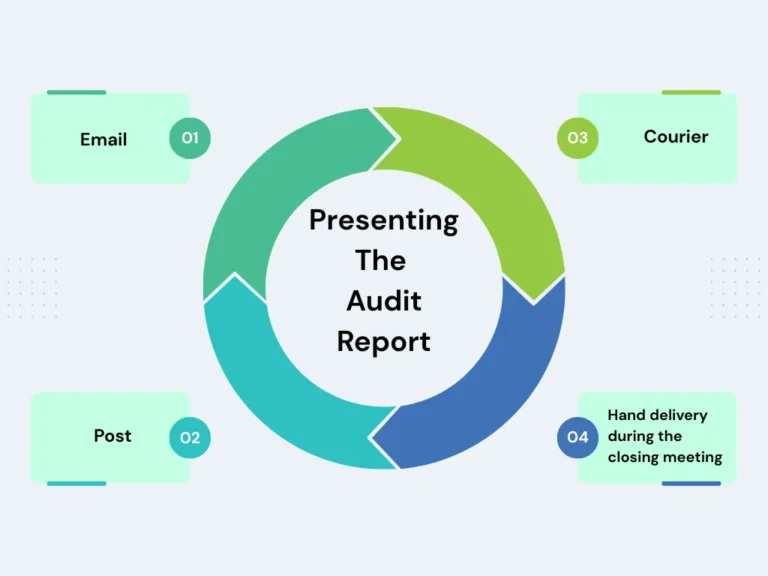
Approving and Distributing the Audit Report
Audit reports may be presented to the recipient through:
Completing the Audit
- The audit is completed when all activities described in the audit plan have been carried out and the approved audit report has been distributed.
- Documents pertaining to the audit should be retained or destroyed by agreement between the participating parties and in accordance with audit programme procedures and applicable statutory, regulatory, and contractual requirements.
- Unless required by law, the audit team and those responsible for managing the audit programme should not disclose the contents of documents, any other information obtained during the audit, or the audit report, to any other party without the explicit approval of the audit client and, where appropriate, the auditee. If disclosure is required, the audit client and auditee should be informed promptly.
- Lessons learned from the audit should be entered into the continual improvement process of the management system of the audited organisations.
Conducting an Audit Follow-up
The conclusions of the audit may indicate the need for corrective, preventive, or improvement actions. These actions are usually undertaken by the auditee within an agreed timeframe.
The auditee should keep the audit client informed of the status of these actions. The completion and effectiveness of these actions should be verified, which may be part of a subsequent audit.
Corrective Action
- Follow-up activities are crucial; without them, the audit is incomplete, and future audits will suffer. Where there is no confirmation that an NCR has been addressed, there can be no confidence that the auditee’s performance has improved.
- In third-party auditing, the audit client or auditee is responsible for submitting a Corrective Action Plan to the auditor for NCRs raised. This response is expected within 2 weeks from the last day of the audit.
Follow-up Action
- The first follow-up entails reviewing and accepting the proposed corrective action derived from an NCR. Once the auditor receives the NCR form completed by the audited organisation, they evaluate the proposed corrective action and decide whether it is acceptable.
- The auditor notifies the auditee of the acceptance or rejection. Timeframes should be mutually agreed between the auditor and the auditee. If no response is received, the auditor sends a reminder. If the proposed corrective action is unacceptable, the auditor must provide reasons.
Further Follow-up Activities
The auditor stays in touch with the audited organisation to monitor progress, especially if corrective actions involve new systems or processes. The exact date for final closeout is determined based on progress.
Final Follow-up and Close-out
The activity for final follow-up and closeout depends on:
- Number of NCRs issued
- Magnitude of nonconformities
- Corrective actions implemented
- Audit program requirements
Typical Follow-up Timeframes:
- Major nonconformity: within 3 months
- Minor nonconformity: within 6 months or at the next audit
Internal Audit Follow-up: Planned internal audits can serve as final follow-up and close-out. The auditor responsible for the original audit should oversee this activity.
Conducting the Final Follow-up and Close-out Activity
- Auditee must be notified
- Activity must be properly prepared
- A team should verify effective implementation of corrective actions
If all NCRs are resolved and corrective actions are effective, the audit team can close out the NCRs. If deviations persist or actions are ineffective, a new NCR may be raised, and further follow-up scheduled.
Follow-up results and close-out decisions are documented in a report, following the same rules as the original audit report.
Conclusion
Effective audits do not end with the collection of evidencethey require thorough reporting, careful follow-up, and proper close-out. Following structured procedures for preparing, approving, and distributing audit reports ensures clarity, transparency, and actionable results.
Popularcert helps organizations train audit teams to consistently apply these best practices, improving audit credibility, compliance, and overall operational efficiency. Take the next step with Popularcert to ensure your audits are thorough, compliant, and impactful.
FAQ
What is the purpose of an audit report?
The audit report provides a clear, concise record of the audit findings, conclusions, and recommendations, helping management make informed decisions and take corrective actions.
Who is responsible for preparing the audit report?
The audit team leader is responsible for the preparation, accuracy, and content of the audit report.
When is an audit considered complete?
An audit is complete when all planned activities are carried out, the audit report is approved and distributed, and follow-up actions are monitored for effectiveness.
How is follow-up conducted?
Follow-up includes reviewing proposed corrective actions, monitoring their implementation, and conducting a final verification to ensure NCRs are resolved effectively.
Can audit reports be shared outside the organisation?
No. Audit reports and related documents are confidential and can only be shared with the audit client or approved parties, unless disclosure is required by law.
- Join 1000+ Certified Companies
Ready to Get Certified for Your Next Project?
- Free Consultation
- Expert Guidance
- Fast Turnaround
Reach Us Now