Haccp Certification
Simplify your path to global compliance. We offer end-to-end consulting, training, and audit support for ISO, HACCP, CE Mark, and a wide range of international standards.
- 11+ Years Experience
- 30+ Countries Served
HACCP stands for Hazard Analysis and Critical Control Points, this is a widely recognized system used to ensure food safety. It helps businesses in the food industry identify and manage risks like chemical, physical, and biological hazards that could contaminate food. By focusing on critical points in the production process, it prevents issues before they occur. This system is essential for maintaining high food safety standards and protecting consumers. It is used globally by farms, factories, restaurants, and other food-related businesses to ensure safe and quality food products. The standard guidelines are derived from Codex Alimentarius General Principles of Food Hygiene CXC 1-1969 (2020). This standard is basically a risk management system for organizations involved in food chain business.
What is HACCP certification?
HACCP certification is a globally recognized standard that ensures food safety by focusing on the process of handling and producing food. Businesses involved in farming, food factories, restaurants, and other food-related industries must follow HACCP guidelines to identify and control hazards like chemical, physical, and biological risks. To become certified, these businesses are assessed by an independent certification body, which checks if they meet the required standards. Once approved, they receive a HACCP certificate, which shows their commitment to food safety.
It’s important to note that HACCP certification is not for individual products but for the entire process. If the process is safe and well-managed, the products will naturally be of high quality. Companies with HACCP certification gain a strong reputation in the global market because customers trust their commitment to safety and quality. This certification also helps businesses comply with international food safety regulations, making it easier to export their products. Overall, HACCP certification is a mark of excellence and reliability in the food industry.
How to Get HACCP certification?
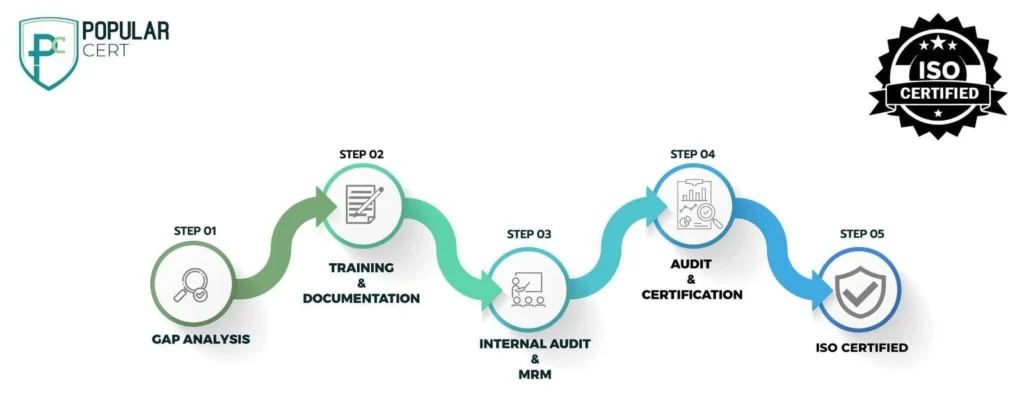
The procedure to apply for HACCP certification
Gap Analysis:
Gap analysis is the first stage where the organization compares its current processes with the requirements of the relevant ISO standard. The purpose is to identify “gaps” or areas where the company is not meeting the standard. This step helps in understanding what changes, improvements, or new systems are needed before moving forward. It acts as a roadmap for achieving compliance.
Training & Documentation:
In this step, employees are trained on the ISO standard and the new processes that need to be followed. Proper awareness ensures everyone understands their roles and responsibilities. At the same time, required documents such as policies, procedures, manuals, and records are created and organized. Documentation is essential because ISO standards are based on evidence of consistent processes.
Internal Audit & MRM (Management Review Meeting):
After implementing the system, an internal audit is conducted within the organization to check whether processes are being followed correctly. This helps identify any issues or non-conformities before the external audit. Following this, a Management Review Meeting (MRM) is held where top management evaluates the system’s performance and decides on improvements to ensure effectiveness.
Audit & Certification:
In this stage, an external certification body conducts an official audit of the organization. The auditors review documents, processes, and practices to verify compliance with the ISO standard. If the organization meets all requirements, the certification body approves it for certification. Any minor issues found must be corrected before final approval.
ISO Certified:
Once the organization successfully passes the audit, it is awarded the ISO certification. This means the company now meets international standards for quality, safety, or other relevant areas. Certification enhances credibility, improves customer trust, and opens up new business opportunities. However, the organization must continue maintaining the system through regular audits and improvements.
What are the fundamental principles of HACCP?
Below are the 7 principles of HACCP
- Conducting a hazard analysis – Study the dangers of chemical, physical or biological which can cause harm to the food
- Identifying critical control points – A Critical Control Point (CCP) in a food process in which controls have to be applied to prevent food related hazards.
- Establish critical limits for CCPs – This is a specific value or a numerical point where the critical limits have to be set
- Establish critical control point monitoring requirements – A proper monitoring system to check everything is under control
- Establish corrective actions – Establishing necessary rectification methods
- Establish record keeping procedures – Maintain relevant records and documents at each level
- Establish verification procedures – Verify regularly and ensure the HACCP system validation
For practical guidance on identifying, controlling, and preventing food safety hazards, explore our HACCP Certification resources.
Get Free Consultation
Our Clients
Our Projects
Why Choose PopularCert?
- Trusted Global ISO Certification Partner
- Experienced Industry-Focused Consultants
- Complete End-to-End Certification Support
- Fast & Transparent Certification Process
- International Compliance & Audit Readiness
- Dedicated Long-Term Customer Support
Types Of ISO Certification
- ISO Certification
- ISO 9001 Certification
- ISO 14001 Certification
- ISO 45001 Certification
- ISO 22000 Certification
- ISO 27001 Certification
- ISO 17025 Certification
- ISO 13485 Certification
- CE Mark Certification
- ISO 20000-1 Certification
- GMP Certification
- Halal Certification
- SOC-1 Certification
- SOC-2 Certification
What are the benefits of HACCP certification?
HACCP certified companies have shown great success in market, few of the benefits have been highlighted below:
- Explore market opportunities: In countries like the USA and UK, HACCP certification is a legal requirement for food businesses. If you’re planning to export food products or run a food-related business in these countries, you must follow HACCP guidelines. This certification ensures that your food is safe and meets strict quality standards. Without it, you won’t be able to operate or sell your products in these markets. So, if you’re aiming to grow your food business internationally, getting HACCP certified is a crucial step to stay compliant and build trust with customers.
- Gain customer confidence: If your company follows the HACCP standard, it shows buyers that you take food safety seriously and understand how to prevent risks. This builds trust and confidence in your products because customers know you’re committed to delivering safe, high-quality food. When they see the HACCP certification, they feel reassured that your processes are reliable and meet global safety standards. This not only strengthens your reputation but also makes your products more appealing in the market. In short, HACCP certification is a clear sign that your company cares about its customers and their well-being.
- Streamline your business: The HACCP standard provides a clear and practical approach to identifying risks like physical, chemical, and biological hazards at every step of food production. For example, it helps you check for contamination in raw materials, ensure safe processing, and verify the safety of finished products before packing. By following HACCP, you can spot potential issues early and take steps to prevent them. This ensures the food you produce is safe and high-quality, giving customers confidence in your brand. It’s like having a safety checklist that guides you from start to finish, protecting both your business and your consumers.
What is the cost of HACCP certification?
The cost of HACCP certification depends on factors like the size of your business, the scope of the certification, and your location. For example, a small restaurant might pay less than a large food factory. The expert team at Popularcert can help you understand these costs and provide a tailored plan that fits your needs. They’ll give you a clear and detailed proposal to guide you through the process. This way, you know exactly what to expect and can plan accordingly. It’s like having a trusted partner to make the certification journey smooth and stress-free.
Why choose Popularcert for your HACCP certification?
What makes us stand out is our unique approach and years of experience in the industry. We offer top-quality services at prices that won’t break the bank. The certifications we provide are authentic and recognized by government agencies, so you can trust their value. Whether you’re a small business or a large company, we’re here to make the certification process simple and reliable. Think of us as your trusted partner, helping you achieve your goals with confidence and ease.
Free HACCP Checklist
Assess compliance, reduce risks, and strengthen your food safety practices.
- Practical & Audit-Ready
- Save Time & Effort
- No Registration Required
Ready to Meet Food Safety Standards and Expand Your Market?
HACCP certification is essential to ensure compliance, avoid costly risks, and gain customer confidence. Popularcert helps you implement and certify your system efficiently so you can focus on growing your food business.
Start Your HACCP Certification Journey Today with Expert Guidance
FAQ
What companies can achieve HACCP certification?
Farms, semi-processed, processed food manufactures, hotels, restaurant, food product distributors can achieve HACCP certification.
HACCP certification important for tenders?
Depends on tender requirements, if there is a specific eligibility requirement then you have to get certify first.
Can an individual person get HACCP certified professional?
Yes, there are training courses which an individual person can attend and get certified.
Who developed HACCP standard?
HACCP standard was first developed in the 1960s by the U.S. National Aeronautics and Space Administration (NASA).
Do governments consider HACCP certified companies?
Yes, HACCP certified companies will have advanced understanding of food related hazards so the governments will have special considerations for them.
- Join 1000+ Certified Companies
Ready to Get Certified for Your Next Project?
- Free Consultation
- Expert Guidance
- Fast Turnaround
Reach Us Now
Claim Your Free Consultation Today!