
ISO 31000 Certification: Risk Management Framework for Businesses
Simplify your path to global compliance. We offer end-to-end consulting, training, and audit support for ISO, HACCP, CE Mark, and a wide range of international standards.
- 11+ Years Experience
- 30+ Countries Served
ISO 31000 is an international risk management standard that helps organizations identify, evaluate, and control risks that may affect business operations, finances, compliance, or reputation. Instead of focusing on one department, ISO 31000 creates a company-wide approach to managing uncertainty and improving decision-making.
The standard can be applied to any organization, regardless of size or industry. Businesses use ISO 31000 to reduce operational disruptions, prepare for unexpected situations, improve business continuity, and strengthen long-term stability. It provides practical guidance for building a structured risk management process that supports strategic and operational goals.
Why ISO 31000 Is Important for Businesses
Every business faces risks that can affect operations, profitability, customer trust, or legal compliance. These risks may include cyber threats, supplier failures, financial uncertainty, workplace incidents, regulatory changes, or project delays.
Without a structured risk management system, organizations often respond to problems only after damage has already occurred. ISO 31000 helps businesses move from reactive decision-making to proactive risk control.
Implementing ISO 31000 enables organizations to:
- Identify potential threats before they escalate
- Improve business continuity planning
- Support informed strategic decisions
- Reduce operational uncertainty
- Strengthen stakeholder confidence
- Improve resilience during crises and disruptions
By integrating risk management into daily operations, businesses can improve stability, protect resources, and maintain sustainable growth in competitive markets.
How to Get ISO 31000 Certification?
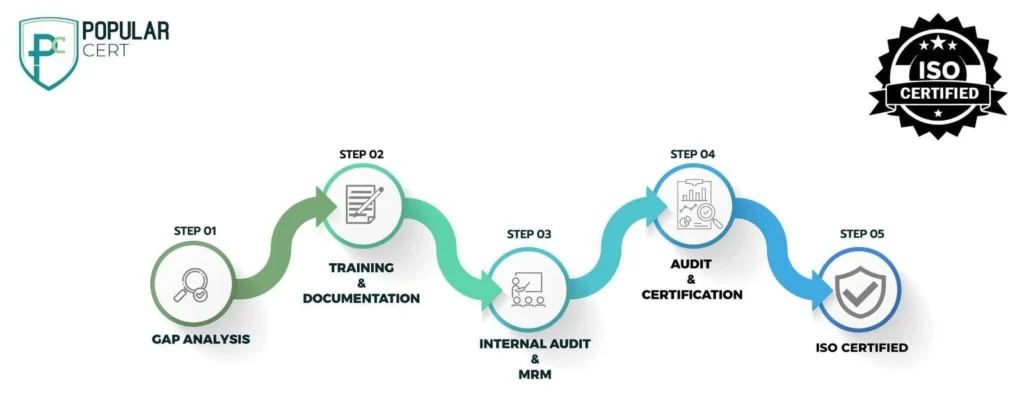
Steps to obtain ISO 31000 Certification
Gap Analysis:

is the starting point, where an organization compares its current processes with ISO standards to identify what is missing or needs improvement. This helps in understanding the gaps that must be filled to meet the required quality standards.
Training & Documentation:

involves educating employees about ISO requirements and preparing proper documents such as policies, procedures, and records. This step ensures that everyone understands their roles and that processes are clearly written and standardized.
Internal Audit & MRM (Management Review Meeting):

is conducted to check whether the implemented processes are being followed correctly. Internal audits help find any issues, and management reviews the results to make decisions for further improvements.
Audit & Certification:

is carried out by an external certification body. They examine the organization’s system to ensure it meets ISO standards. If everything is satisfactory, the organization is approved.
ISO Certified:

is the final stage where the organization receives the ISO certificate, proving that it meets international quality standards and follows proper management practices.
How to Start ISO 31000 Implementation
You can follow the below mentioned simple and easy steps towards achieving the ISO 31000 certification for your organization:
-
Define Risk Management Responsibilities:
Assign a responsible team or individual to oversee risk identification, assessment, and monitoring activities across departments. -
Identify Business Risks:
Evaluate risks that may impact operations, finance, compliance, cybersecurity, supply chains, employees, or customers. -
Analyze and Prioritize Risks:
Assess the likelihood and impact of each identified risk to determine which issues require immediate attention. -
Monitor and Review Risks:
Risk management should be reviewed regularly to address changing business conditions, emerging threats, and operational updates. -
Develop Risk Treatment Plans:
Create preventive controls, contingency plans, and corrective actions to reduce the impact of potential disruptions.
Key Benefits of ISO 31000 Certification
Get Free Consultation
Our Clients

Our Projects

Why Choose PopularCert?
- Trusted Global ISO Certification Partner
- Experienced Industry-Focused Consultants
- Complete End-to-End Certification Support
- Fast & Transparent Certification Process
- International Compliance & Audit Readiness
- Dedicated Long-Term Customer Support
Types Of ISO Certification
- ISO Certification
- ISO 9001 Certification
- ISO 14001 Certification
- ISO 45001 Certification
- ISO 22000 Certification
- ISO 27001 Certification
- ISO 17025 Certification
- ISO 13485 Certification
- CE Mark Certification
- ISO 20000-1 Certification
- GMP Certification
- Halal Certification
- SOC-1 Certification
- SOC-2 Certification
- Improves enterprise-wide risk visibility
- Supports faster and more informed decision-making
- Reduces operational disruptions and downtime
- Strengthens business continuity planning
- Helps organizations identify compliance-related risks
- Improves stakeholder and investor confidence
- Enhances governance and internal controls
- Supports long-term operational stability
Organizations that integrate ISO 31000 into their business processes are better prepared to manage operational, financial, strategic, and compliance-related risks. The framework helps leadership teams make informed decisions based on structured risk evaluation rather than reactive responses
Industries That Can Benefit from ISO 31000 Certification
| Industry / Sector | How ISO 31000 Helps |
|---|---|
| Manufacturing and Engineering Companies | Helps identify operational risks, reduce production disruptions, and improve workplace safety and efficiency. |
| Healthcare and Pharmaceutical Organizations | Supports patient safety, regulatory compliance, and risk control in medical and pharmaceutical processes. |
| Information Technology and Cybersecurity Firms | Assists in managing cybersecurity threats, data protection risks, and system vulnerabilities. |
| Construction and Infrastructure Companies | Helps control project delays, safety hazards, budget overruns, and compliance risks. |
| Financial Institutions and Insurance Providers | Improves financial risk assessment, fraud prevention, and regulatory compliance. |
| Food and Beverage Industries | Supports food safety, supply chain management, and operational continuity. |
| Government and Public Sector Organizations | Enhances public service reliability, policy implementation, and crisis management preparedness. |
| Logistics and Supply Chain Businesses | Helps minimize transportation delays, supplier disruptions, and inventory-related risks. |
Training of ISO 31000
Organizations can also take advantage of opportunities like sending their employees for in-depth training on risk management practices. Many reputable international training companies offer regular programs designed to equip professionals with the skills and knowledge needed to effectively identify, assess, and manage risks.
Investing in such training not only enhances your team’s expertise but also strengthens your organization’s overall risk management capabilities. It’s a proactive step toward building a culture of preparedness and resilience. By empowering your employees with the right tools and knowledge, you’re not just protecting your business but also, you’re setting it up for long-term success. Consider exploring these training options to give your team the edge they need to navigate uncertainties with confidence.
Common Risks Addressed Through ISO 31000
Organizations implement ISO 31000 to manage a wide range of business risks, including:
- Operational risks caused by process failures or equipment breakdowns
- Financial risks such as cash flow instability or fraud
- Cybersecurity and data protection threats
- Legal and regulatory compliance risks
- Supply chain and vendor-related disruptions
- Workplace health and safety risks
- Project management and contractual risks
- Reputational risks affecting customer trust
A structured risk management framework helps organizations reduce uncertainty and improve decision-making across all business functions.
What Is the Cost of ISO 31000 Implementation?
The cost of ISO 31000 implementation depends on several factors, including organization size, number of operational locations, business complexity, existing risk management practices, and training requirements.
Organizations may incur costs related to:
- Risk assessments
- Documentation development
- Employee training
- Internal audits
- External consulting support
Businesses with existing management systems may require less implementation effort compared to organizations building a risk framework from scratch.
This version looks far more trustworthy.
Why Businesses Choose Popularcert for ISO 31000 Support
Popularcert is a trusted consulting company with a team of experienced professionals who specialize in ISO 31000 certification. We simplify the process for you, leveraging our global expertise to guide your organization every step of the way. With hands-on experience in helping clients achieve certification, we make risk management seamless and stress-free.
Ready to strengthen your business with ISO 31000? Let Popularcert handle the complexities while you focus on what you do best. Contact us today to get started on your journey toward effective risk management and certification. Your business deserves the best—let’s make it happen together!
Knowledge Center: Visit our ISO 31000 Resource Hub for expert risk management insights, implementation strategies, governance best practices, and practical guidance to build a resilient, risk-aware organization.
FAQ
What is the difference between ISO 31000 and ISO 27001?
ISO 31000 focuses on overall organizational risk management, while ISO 27001 specifically addresses information security risks and data protection controls.
Is ISO 31000 certifiable?
ISO 31000 is primarily a guidance standard and not designed for accredited certification in the same way as ISO 9001 or ISO 27001. However, many organizations implement its framework to strengthen enterprise risk management practices.
Which industries use ISO 31000?
ISO 31000 is used across industries including manufacturing, healthcare, construction, finance, logistics, IT, energy, and government sectors.
How long does ISO 31000 implementation take?
Implementation timelines depend on organization size, operational complexity, and existing risk management maturity. Most businesses require several weeks to a few months.
What are the key principles of ISO 31000?
The standard emphasizes integration, structured processes, continuous improvement, customization, inclusiveness, and informed decision-making.
- Join 1000+ Certified Companies
Ready to Get Certified for Your Next Project?
- Free Consultation
- Expert Guidance
- Fast Turnaround
Reach Us Now
Claim Your Free Consultation Today!