
What Is an ISO Audit? A Simple Guide to Audit Types, Process and Business Benefits
1000+
Successful Projects
10+ Years
Industry Experience
Worldwide
Certification Services
24/7 Support
Expert Consultation
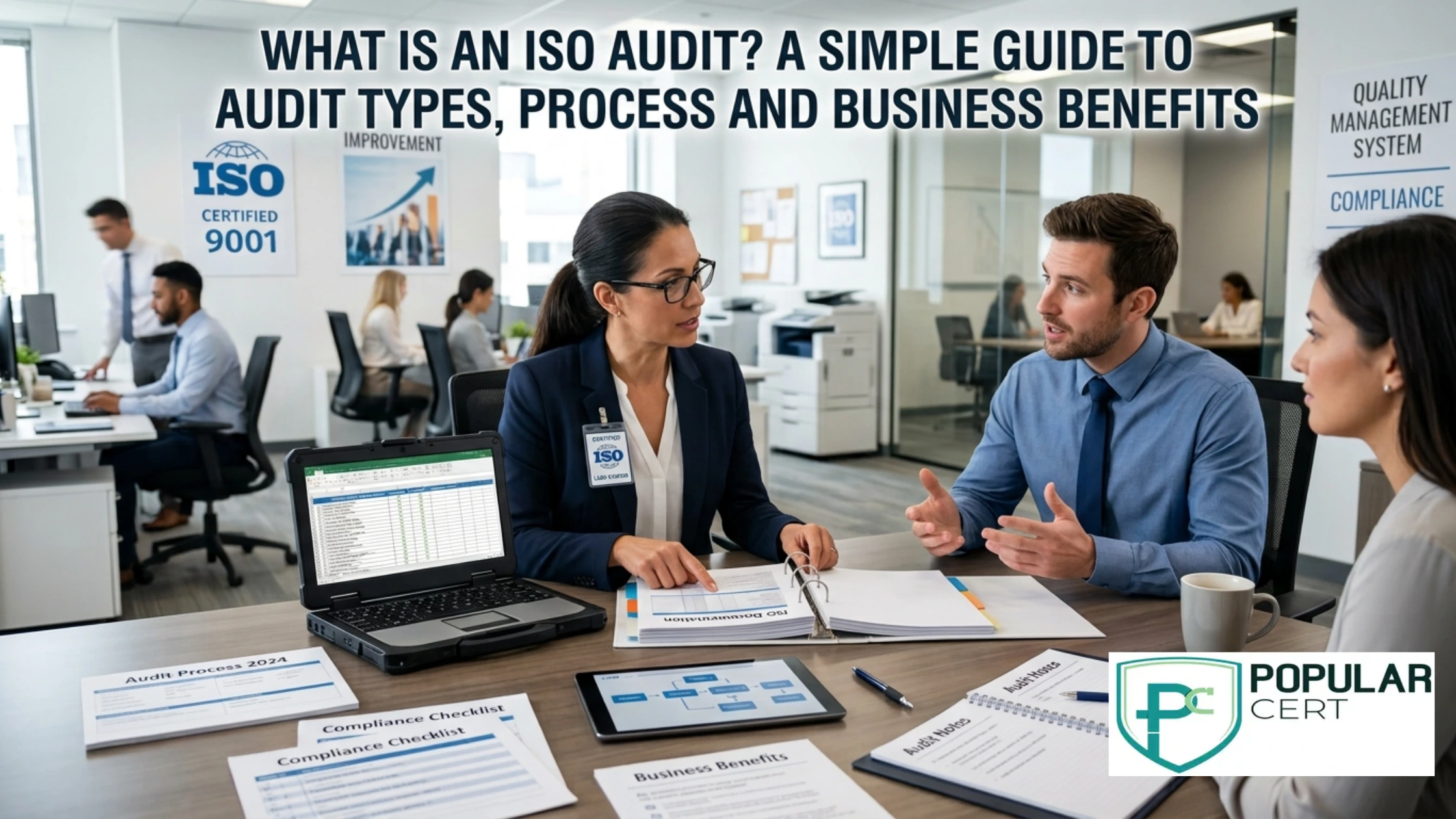
An ISO audit is a structured review of a company’s processes, documents and activities to verify whether they meet the requirements of an ISO management system standard such as ISO 9001, ISO 14001, ISO 45001 or ISO 27001. The purpose of an ISO audit is to identify gaps, improve performance, ensure compliance and prepare an organization for certification or surveillance audits.
Table of Contents
What Is an ISO Audit?
Running a business is not only about producing products or delivering services. It is also about making sure every process works the way it is supposed to. This is where an ISO audit becomes important.
An ISO audit is a systematic examination of how your organization operates. It checks whether your management system follows the requirements of the chosen ISO standard and whether your documented processes are being followed in daily operations.
Many businesses think audits are only about finding mistakes. In reality, an ISO audit is a valuable improvement tool. It highlights strengths, uncovers hidden risks and helps businesses improve efficiency before small issues become major problems.
Whether your company is preparing for ISO certification or maintaining an existing certificate, regular audits help ensure continuous improvement and long-term business success.
Why Are ISO Audits Important?
An ISO audit gives organizations confidence that their management system is working effectively rather than simply existing on paper.
Some of the biggest reasons businesses conduct ISO audits include:
- Verify compliance with ISO standard requirements
- Improve operational efficiency
- Reduce business risks
- Detect process gaps early
- Increase customer confidence
- Prepare for certification audits
- Support continual improvement
- Ensure employees follow documented procedures
- Maintain certification validity
- Strengthen business credibility
Instead of viewing audits as inspections, successful organizations treat them as opportunities to become stronger and more competitive.
What Does an ISO Audit Check?
Although every ISO standard has different requirements, auditors generally evaluate the same core areas.
They review:
- Business objectives
- Management commitment
- Policies and procedures
- Risk management activities
- Employee awareness and competence
- Operational controls
- Records and documentation
- Corrective actions
- Internal audit reports
- Continuous improvement efforts
The auditor looks for objective evidence that processes are implemented consistently and effectively.
Trending Posts
Get Free Consultation
Our Clients

Projects

Our Happy Clients
⭐⭐⭐⭐⭐
“PopularCert made our ISO certification process smooth and professional.”
— Manufacturing Client, Oman
⭐⭐⭐⭐⭐
“Excellent support and documentation guidance.”
— Healthcare Client, Saudi Arabia
⭐⭐⭐⭐⭐
“PopularCert simplified our ISO certification process with professional guidance and fast support.”
— Manufacturing Client, Saudi Arabia
Different Types of ISO Audits
Every ISO audit serves a different purpose. Understanding each type helps organizations prepare properly.
1. Internal Audit (First-Party Audit)
An internal audit is conducted by the organization itself or by an independent consultant working on its behalf.
Its purpose is to:
- Find weaknesses
- Verify compliance
- Improve internal processes
- Prepare for certification audits
Internal audits are mandatory for most ISO management systems.
2. Supplier Audit (Second-Party Audit)
This audit is performed by customers or purchasing organizations to evaluate suppliers.
It helps determine whether suppliers can consistently meet quality, safety or contractual requirements.
Supplier audits are common in manufacturing, automotive, food, aerospace and healthcare industries.
3. Certification Audit (Third-Party Audit)
This audit is conducted by an accredited certification body.
If the organization successfully meets all ISO requirements, it receives ISO certification.
Certification audits are independent and unbiased.
4. Surveillance Audit
ISO certification does not end after receiving the certificate.
Certification bodies conduct surveillance audits periodically to verify that the management system continues to operate effectively.
These audits help organizations maintain certification.
5. Recertification Audit
ISO certificates generally remain valid for three years.
Before the certificate expires, businesses undergo a recertification audit to renew their certification.
ISO Audit Process Explained
The ISO audit process follows a structured approach that ensures consistency and fairness.
Audit Stage | What Happens | Purpose |
Audit Planning | Scope, objectives and audit schedule are prepared | Organize the audit effectively |
Document Review | Policies, procedures and records are reviewed | Verify documentation compliance |
Opening Meeting | Auditor explains the audit plan | Align expectations |
On-Site Audit | Interviews, observations and evidence collection | Evaluate actual implementation |
Findings & Nonconformities | Gaps and improvement opportunities are identified | Improve compliance |
Closing Meeting | Audit results are discussed | Explain findings clearly |
Corrective Actions | Organization resolves identified issues | Strengthen the management system |
Follow-Up | Auditor verifies corrective actions if required | Confirm improvements |
What Documents Are Reviewed During an ISO Audit?
Documentation plays a major role in every ISO audit. However, auditors do not simply check whether documents exist, they verify whether they are being used correctly.
Common documents include:
- Quality manual (if applicable)
- Company policies
- Process maps
- Standard operating procedures
- Risk assessments
- Internal audit reports
- Management review records
- Employee training records
- Corrective action reports
- Customer feedback
- Calibration records
- Inspection reports
- Performance monitoring data
- Objectives and KPIs
The exact documentation depends on the ISO standard being audited.
How Should Businesses Prepare for an ISO Audit?
Preparation is one of the biggest factors affecting audit success.
Organizations should begin well before the audit date rather than waiting until the final week.
Good preparation includes:
- Reviewing all documented procedures
- Conducting internal audits
- Closing previous nonconformities
- Updating records
- Training employees
- Verifying legal and regulatory compliance
- Reviewing business objectives
- Performing management reviews
- Organizing evidence
- Ensuring departments understand their responsibilities
Well-prepared organizations experience smoother audits and fewer findings.
Common Nonconformities Found During ISO Audits
Many audit findings are surprisingly simple and can be prevented through regular monitoring.
Some common nonconformities include:
- Incomplete documentation
- Outdated procedures
- Missing records
- Employees unaware of procedures
- Inconsistent process implementation
- Poor document control
- Lack of internal audits
- Delayed corrective actions
- Missing management reviews
- Weak risk assessments
Identifying these issues early helps organizations avoid larger compliance problems later.
Benefits of Regular ISO Audits
Business Benefit | How Regular Audits Help |
|---|---|
Better Process Control | Audits ensure processes remain standardized, consistent, and are followed correctly across the organization. |
Reduced Business Risks | Early identification of nonconformities and weaknesses helps prevent operational disruptions and costly issues. |
Higher Customer Satisfaction | Consistent processes improve product and service quality, leading to greater customer confidence and satisfaction. |
Stronger Employee Awareness | Regular audits help employees better understand their roles, responsibilities, and quality expectations. |
Improved Compliance | Audits verify ongoing compliance with ISO standards, regulatory requirements, and internal policies. |
Better Decision-Making | Audit findings provide management with reliable data to support corrective actions and continuous improvement. |
Increased Efficiency | Identifying and eliminating unnecessary activities helps save time, reduce waste, and optimize resources. |
Greater Business Reputation | Organizations that maintain effective audit programs demonstrate reliability, strengthen stakeholder trust, and enhance their market reputation. |
ISO Audit vs ISO Certification
Many people confuse ISO audits with ISO certification, but they are different.
An ISO audit is the assessment process used to evaluate whether an organization meets the requirements of an ISO standard. It identifies strengths, weaknesses and areas for improvement.
ISO certification, on the other hand, is the formal recognition awarded by an accredited certification body after the organization successfully passes a third-party certification audit.
In simple terms, the audit is the evaluation, while certification is the outcome of successfully meeting the required standard.
Which ISO Standards Require Audits?
Almost every ISO management system standard requires regular internal and external audits.
Some of the most widely adopted standards include:
- ISO 9001 – Quality Management System
- ISO 14001 – Environmental Management System
- ISO 45001 – Occupational Health and Safety Management System
- ISO 27001 – Information Security Management System
- ISO 22000 – Food Safety Management System
- ISO 13485 – Medical Device Quality Management System
- ISO 20000-1 – IT Service Management System
Although each standard has unique requirements, the overall audit approach remains similar.
Tips for Passing an ISO Audit Successfully
Passing an ISO audit is not about creating perfect paperwork at the last minute. It is about consistently following well-designed processes every day.
Keep these practical tips in mind:
- Understand the requirements of your chosen ISO standard.
- Keep documents current and well organized.
- Conduct regular internal audits to identify gaps early.
- Ensure employees know their roles and responsibilities.
- Record evidence of activities and improvements.
- Address nonconformities without delay.
- Involve top management in the audit process.
- Treat audits as opportunities for learning rather than inspections.
Organizations that maintain their management systems throughout the year generally experience smoother audits with fewer corrective actions.
Why Choose Popularcert for ISO Audit Support?
Preparing for an ISO audit can seem challenging, especially if it is your organization’s first certification journey. Popularcert simplifies the process by helping businesses understand ISO requirements, close compliance gaps and prepare confidently for every stage of the audit.
Our experienced consultants work closely with organizations of all sizes to conduct gap assessments, support documentation, provide employee training, perform internal audits and guide businesses through certification audits. We focus on practical solutions that improve business performance while making the audit process smooth and stress-free.
Conclusion
An ISO audit is much more than a compliance requirement. It is a valuable management tool that helps organizations evaluate performance, improve processes and build confidence among customers, regulators and stakeholders. By conducting regular internal audits, addressing nonconformities promptly and preparing effectively for external assessments, businesses can maintain strong management systems and achieve long-term success.
Rather than viewing audits as a challenge, organizations should embrace them as opportunities to learn, improve and grow. With the right planning and expert guidance, an ISO audit becomes a stepping stone toward better quality, stronger compliance and continuous business improvement.
FAQ
What is an ISO audit?
An ISO audit checks whether a business follows ISO standard requirements.
How often are ISO audits conducted?
Internal audits are usually annual, while certification bodies conduct periodic surveillance audits.
Who performs an ISO audit?
Internal teams, customers or accredited certification bodies perform ISO audits.
Can a company fail an ISO audit?
Yes, significant nonconformities may delay certification until corrective actions are completed.
Is an ISO audit mandatory?
It is mandatory for organizations seeking or maintaining ISO certification.
- Join 1000+ Certified Companies
Ready to Get Certified for Your Next Project?
- Free Consultation
- Expert Guidance
- Fast Turnaround
Reach Us Now