
ISO Certification in South Korea
Simplify your path to global compliance. We offer end-to-end consulting, training, and audit support for ISO, HACCP, CE Mark, and a wide range of international standards.
- 11+ Years Experience
- 30+ Countries Served
ISO Certification is an internationally recognized way of showing that an organization’s management systems, products, or services meet globally accepted standards for quality, safety, efficiency, and continual improvement. In South Korea, businesses across manufacturing, electronics, automotive, shipbuilding, healthcare, logistics, construction, and digital services are adopting ISO certification to strengthen operational performance, meet regulatory and customer expectations, and compete in global markets. Whether serving domestic or international clients, ISO certification helps organizations enhance credibility, improve compliance, and drive sustainable business growth through internationally recognized best practices.
What is ISO Certification?
ISO Standard Implementation provides a beneficial assessment policy for globalized, nondomestic service providers. The International Organization for Standardization (ISO) is an independent, non-governmental global body that forms an international quality-ingrained, safety, environmental governance proactive, and operational efficiency standard framework for all sectors.
The strength provided in stakeholder trust towards an organization can be blindfolded, with it maintaining a competitive advantage in both regional and global markets enabling them to garner attention.
Our ISO Certification Process Explained Step-by-Step

Consultation and Gap Analysis

PopularCert’s experts begin by understanding your organization’s needs and current management practices in South Korea. We then conduct a gap analysis to identify areas requiring improvement to meet ISO standards.
Planning, Documentation, and Policy Development

Based on the gap analysis, we develop a detailed implementation plan, allocate resources, and help create necessary policies and documentation. These policies and procedures are integrated into your existing framework in alignment with South Korean business operations.
Training and Awareness

We provide comprehensive training for your staff, ensuring they understand the ISO requirements and their role in maintaining the management system effectively within the South Korean industry context.
Internal Audit and Management Review

After implementing the management system, we conduct an internal audit to evaluate system efficiency and identify any non-conformities. Following this, a management review ensures the system is aligned with your organizational goals and responsibilities.
External Certification Audit and Certification

We coordinate with accredited certification bodies in South Korea for the external audit. Upon successful audit, we assist in obtaining ISO certification. We also ensure ongoing compliance through annual surveillance audits and provide guidance for continuous improvements.
Benefits of ISO Certification In South Korea
- Elevated Credibility and Reputation : Attaining ISO certification in South Korea bolsters a company’s credibility and reputation within the local and international market, instilling confidence among stakeholders, partners, and customers alike.
- Enhanced Operational Efficiency : Implementing ISO standards fosters streamlined processes, leading to increased efficiency and productivity across all aspects of a South Korean organization’s operations.
- Expanded Market Access : ISO certification serves as a gateway to new markets and business opportunities for companies in South Korea, enabling them to compete globally and access lucrative international contracts.
- Regulatory Compliance : ISO certification ensures compliance with South Korea’s legal and regulatory requirements, safeguarding organizations against potential penalties, fines, and legal issues.
- Heightened Customer Satisfaction : By adhering to ISO standards, organizations in South Korea deliver products and services of consistent quality, resulting in heightened customer satisfaction, trust, and loyalty.
- Risk Mitigation : ISO certified organizations in South Korea are better equipped to identify, assess, and mitigate risks, thereby reducing the likelihood of costly errors, accidents, and liabilities.
- Cultivation of Continuous Improvement : ISO certification fosters a culture of continuous improvement and innovation among South Korean businesses, encouraging them to regularly evaluate and enhance their processes, products, and services to meet evolving market demands and exceed customer expectations.
Cost Of ISO Certification In South Korea
Get Free Consultation
Our Clients

Our Projects
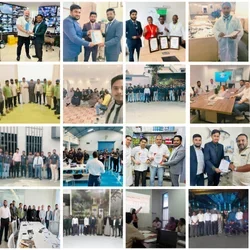
Why Choose PopularCert?
- Trusted Global ISO Certification Partner
- Experienced Industry-Focused Consultants
- Complete End-to-End Certification Support
- Fast & Transparent Certification Process
- International Compliance & Audit Readiness
- Dedicated Long-Term Customer Support
Types Of ISO Certification In South Korea
- ISO Certification In South Korea
- ISO 9001 Certification in South Korea
- ISO 14001 Certification in South Korea
- ISO 45001 Certification in South Korea
- ISO 22000 Certification in South Korea
- ISO 27001 Certification in South Korea
- ISO 17025 Certification in South Korea
- ISO 13485 Certification in South Korea
- CE Mark Certification in South Korea
- ISO 20000-1 Certification in South Korea
- GMP Certification in South Korea
- Halal Certification in South Korea
- SOC-1 Certification in South Korea
- SOC-2 Certification in South Korea
The cost of ISO Certification in South Korea depends on several factors, such as the type of ISO standard, the size and complexity of your business, the number of locations, and the certification body you choose. It usually includes costs for hiring consultants to help with the process, audit fees, employee training, and organizing your documents and processes. There are also yearly maintenance costs to stay certified. Overall, it’s an investment that demonstrates your dedication to quality, compliance, and meeting international standards positioning your South Korean business for long-term success and global competitiveness.
Which ISO Standard Fits Your Industry in South Korea?
| Industry in South Korea: | Recommended ISO Standards: | Why It Matters Here: |
|---|---|---|
| Semiconductors & electronics manufacturing (Seoul, Icheon, Pyeongtaek) | ISO 9001, ISO 14001 | Global OEM buyers and Korean chaebol supply chains (Samsung, SK Hynix, LG) require ISO 9001 as a baseline vendor qualification, with ISO 14001 increasingly requested for environmental compliance in fabrication plants. |
| Automotive & auto parts (Ulsan, Changwon, Incheon) | ISO 9001, IATF 16949, ISO 14001 | Hyundai/Kia’s tier-1 and tier-2 supplier programs typically mandate automotive-specific quality certification alongside standard ISO 9001. |
| Shipbuilding & heavy industry (Busan, Ulsan, Geoje) | ISO 9001, ISO 45001 | Heavy industry with high workplace-injury exposure; ISO 45001 is often required for both insurance and shipyard safety compliance, on top of quality certification for export contracts. |
| IT, software & SaaS (Seoul, Pangyo Techno Valley) | ISO 27001, SOC 2 | Korean and international enterprise clients increasingly require ISO 27001 or SOC 2 before signing data-processing agreements, particularly for cloud and fintech vendors. |
| Healthcare & medical devices (Seoul, Incheon) | ISO 13485, ISO 9001 | Required for medical device manufacturers seeking MFDS (Ministry of Food and Drug Safety) approval and for export into regulated markets like the EU and US. |
| Food & beverage manufacturing/export | ISO 22000, HACCP, Halal | ISO 22000 supports both domestic food safety compliance and export requirements; Halal certification is increasingly requested for exports to Southeast Asia and the Middle East. |
| Cosmetics & K-beauty export (Seoul, Incheon) | ISO 22716 (GMP for cosmetics), ISO 9001 | Export buyers, especially in the EU and Middle East, routinely require GMP cosmetic certification alongside quality certification. |
| Construction & engineering | ISO 9001, ISO 45001, ISO 14001 | Public infrastructure tenders in South Korea commonly list ISO 9001 and ISO 45001 as pre-qualification requirements for bidders. |
| Logistics & shipping (Busan, Incheon ports) | ISO 9001, ISO 28000 | ISO 28000 (supply chain security) is relevant for logistics operators handling port and freight-forwarding contracts. |
| Energy, utilities & renewables | ISO 50001, ISO 14001 | Energy management certification is tied to Korea’s carbon-neutrality targets and corporate ESG reporting requirements. |
| Testing & calibration labs | ISO/IEC 17025 | Required for labs seeking KOLAS (Korea Laboratory Accreditation Scheme) recognition or international test-result acceptance. |
How ISO Certification In South Korea can help?
- Understand the Value of ISO Certification : Recognize its role in enhancing business credibility, operational efficiency, and alignment with international standards all critical for thriving in South Korea’s competitive and evolving market.
- Align with South Korea’s Development Goals : Utilize ISO certification to foster innovation, sustainability, and excellence, supporting South Korea’s national development priorities and vision for economic growth and global competitiveness.
-
Choose the Right Certification Focus on key
ISO standards that are most relevant for businesses in South Korea:
ISO 9001: Quality Management ISO 14001: Environmental Management
ISO 45001: Occupational Health and Safety
ISO 27001: Information Security
ISO 50001: Energy Management - Expand Internationally : Use ISO certification to access global markets, build partnerships, and confidently grow your business footprint beyond South Korea’s borders.
- Partner with Experts : Collaborate with us professionals to simplify the certification process, ensuring full compliance while unlocking sustainable growth opportunities in South Korea and abroad.
Why Choose PopularCert for ISO Certification In South Korea ?
PopularCert makes ISO certification simple and stress-free for businesses in South Korea. With expert consultants guiding you through every step from documentation to audits—they ensure the process is smooth and efficient. Their services are tailored to fit your business needs, offering cost-effective solutions without compromising on quality. Whether you’re a small business or a large enterprise, we helps you achieve globally recognized ISO certification while supporting long-term compliance and growth. Are you looking for the best consultants for ISO Certification in South Korea? we can help you achieve ISO certification at an affordable cost.
Korea Business Insights: Explore our South Korea ISO Certification resources for industry-specific certification guidance, compliance updates, implementation best practices, and expert insights to help businesses achieve internationally recognized ISO standards and sustainable growth.
FAQ
What is ISO certification and why is it important in South Korea?
ISO certification is a formal recognition that a business complies with internationally accepted standards for quality, safety, efficiency, or environmental management. In South Korea, ISO certification is important because it enhances business credibility, aligns operations with global best practices, improves efficiency, and increases trust among customers, partners, and regulators—both locally and internationally.
How long does it take to get ISO certified in South Korea?
The timeline to achieve ISO certification in South Korea typically ranges from a few weeks to several months, depending on the size and complexity of the organization, the chosen ISO standard, and the company’s current level of preparedness. On average, most businesses can expect the process to take between 2 to 3 months.
What types of ISO certifications are most common in South Korea?
The most common ISO certifications in South Korea include:
ISO 9001 – Quality Management
ISO 14001 – Environmental Management
ISO 45001 – Occupational Health and Safety
ISO 27001 – Information Security Management
ISO 50001 – Energy Management
These certifications are widely adopted across industries such as manufacturing, electronics, automotive, healthcare, and IT.
How much does ISO certification cost in South Korea?
The cost of ISO certification in South Korea depends on several factors including the type of ISO standard, company size, complexity of operations, number of sites, and the certification body selected. Costs generally cover consultation, documentation, staff training, audits, and ongoing compliance. Though it’s an investment, the long-term benefits in terms of market access, compliance, and operational efficiency are significant.
Can small businesses in South Korea get ISO certified?
Yes, small businesses in South Korea can absolutely get ISO certified. PopularCert offers tailored and affordable solutions to help small and medium enterprises (SMEs) implement ISO standards effectively without overwhelming their resources. Certification can open new opportunities, improve internal processes, and boost credibility for smaller organizations looking to grow.
- Join 1000+ Certified Companies
Ready to Get Certified for Your Next Project?
- Free Consultation
- Expert Guidance
- Fast Turnaround
Reach Us Now
Claim Your Free Consultation Today!