
ISO 41001 Certification
Simplify your path to global compliance. We offer end-to-end consulting, training, and audit support for ISO, HACCP, CE Mark, and a wide range of international standards.
- 11+ Years Experience
- 30+ Countries Served
What is ISO 41001?
An international standard for Facility Management (FM) systems, ISO 41001 offers a framework to improve operational effectiveness, sustainability and efficiency. It assists companies in creating, putting into practice, maintaining and enhancing FM systems in order to comply with legal and business goals. ISO 41001 encourages best practices for facility management, resource optimization and enhancing worker productivity and safety.
Organizations of all sizes and sectors can benefit from this certification, which guarantees cost-effectiveness, quality and consistency in facilities management operations. Achieving ISO 41001 helps companies provide high-quality services while adhering to international standards, boosts reputation and promotes sustainability initiatives.
The importance of ISO 41001 Certification
Organizations looking to enhance their Facility Management (FM) systems must obtain ISO 41001 certification in order to guarantee effectiveness, sustainability and adherence to global standards. It assists companies in maximizing facility operations, cutting expenses and improving resource use while preserving a secure and effective workplace. Organizations show their dedication to best practices in facility management by obtaining ISO 41001, which boosts operational consistency and stakeholder confidence. This certification improves service quality, reduces environmental impact and supports regulatory compliance. Additionally, it encourages ongoing development, which enables companies to successfully adjust to shifting facility requirements.
All industries can benefit from ISO 41001’s ability to expedite facility operations, lower hazards and enhance worker well-being. In the end, this helps businesses succeed and remain resilient in a market that is becoming more competitive and sustainability-focused.
How to Get ISO 41001 Certification
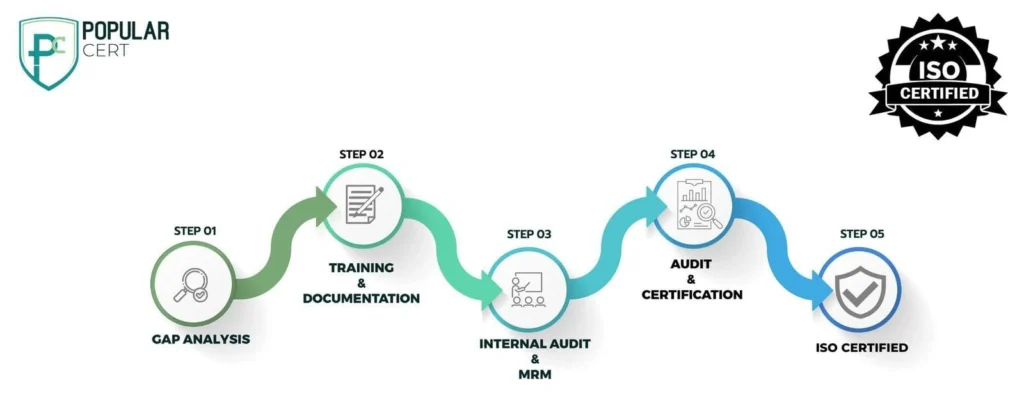
GAP ANALYSIS

The organization begins by evaluating its existing facility management practices against ISO 41001 requirements. This includes reviewing how facilities, assets, maintenance, and support services are currently managed. Any gaps identified—such as lack of structured processes, risk management, or performance monitoring—are documented to create a clear action plan for improvement.
TRANING AND DOCUMENTATION

At this stage, employees are trained on ISO 41001 principles and their roles in facility management. Proper documentation is developed, including policies, procedures, asset management plans, maintenance schedules, and service level agreements. This ensures all facility-related activities are standardized, well-controlled, and aligned with organizational objectives.
INTERNAL AUDIT AND MRM

Internal audits are conducted to assess whether the facility management system is effectively implemented and compliant with ISO 41001. Any non-conformities are identified and corrected. Management Review Meetings (MRM) are then held to evaluate system performance, resource allocation, risks, and opportunities for improvement, ensuring leadership involvement.
AUDIT AND CERTIFICATION

An external certification body performs a formal audit to verify compliance with ISO 41001 standards. The audit evaluates facility operations, documentation, performance metrics, and continuous improvement practices. If the organization meets all requirements, it proceeds toward certification.
ISO CERTIFIED

Once successfully audited, the organization is awarded ISO 41001 certification. This demonstrates that the business follows internationally recognized facility management practices, improves operational efficiency, enhances workplace experience, and ensures better management of assets and infrastructure.
ISO 41001 Certification Requirements
A few prerequisites must be met for the Facility Management System (FMS) to be implemented in businesses effectively. The last seven of these requirements provide the guidelines for putting the Facility Management System into practice, whereas the first three are only introductory:
- Clause 04 (Context of the Organization): Understanding your organization’s needs for putting the Facility Management System into place is the focus of this clause. Additionally, it assists you in customizing your FMS to meet your organization’s needs.
- Clause 05 (Leadership): The importance of top management in FMS deployment is emphasized in this clause. Every employee should understand their jobs and responsibilities.
- Clause 06 (Planning): To reduce those risks and establish goals for an efficient FMS, this entails evaluating the current system and doing risk analysis. It also entails examining how the business interacts at all levels and through various channels.
- Clause 07 (Support): It covers managing all of your FMS’s resources, including maintaining control over the organization’s recorded data.
- Clause 08 (Operation): It addresses the operational needs for facility management. It also entails getting the company ready for any possible crisis.
- Clause 09 (Performance Evaluation): This is to guarantee the effectiveness of your FMS. This part tracks and evaluates the current system to determine its shortcomings.
- Clause 10 (Continual Improvement): This guarantees the efficacy of your FMS. It involves a continuous assessment of your FMS’s compliance with ISO 41001 standards.
Get Free Consultation
Our Clients

Our Projects

Why Choose PopularCert?
- Trusted Global ISO Certification Partner
- Experienced Industry-Focused Consultants
- Complete End-to-End Certification Support
- Fast & Transparent Certification Process
- International Compliance & Audit Readiness
- Dedicated Long-Term Customer Support
Types Of ISO Certification
- ISO Certification
- ISO 9001 Certification
- ISO 14001 Certification
- ISO 45001 Certification
- ISO 22000 Certification
- ISO 27001 Certification
- ISO 17025 Certification
- ISO 13485 Certification
- CE Mark Certification
- ISO 20000-1 Certification
- GMP Certification
- Halal Certification
- SOC-1 Certification
- SOC-2 Certification
Benefits of achieving ISO 41001 Certification
- Enhanced Facility Management Efficiency: By ensuring a methodical and planned approach to facility management, ISO 41001 enhances resource usage and operational efficiency.
- Improved Compliance with Regulations: By adhering to legal standards and international best practices, organizations lower the risk of non-compliance and associated fines.
- Cost Reduction & Resource Optimization: By optimizing procedures and enhancing asset management, companies can save operating expenses, cut down on waste and strengthen sustainability initiatives.
- Increased Employee Productivity & Well-being: A well-run facility improves employee satisfaction and performance by creating a safer, healthier and more effective work environment.
- Strengthened Business Reputation & Marketability: A certification increases credibility and competitive advantage, which draws in clients, investors and partners by demonstrating a dedication to high-quality facility management.
- Continuous Improvement & Risk Management: Because ISO 41001 encourages continuous evaluation and development, businesses can proactively manage risks and adjust to changing industry requirements.
Case Studies and Success Stories
Organizations from various industries have been able to improve their facility operation in an impactful manner through ISO 41001 Facility Management System Certification. Here are just a few examples of organizations that have successfully implemented this international standard:
Healthcare Facility
After experiencing increased maintenance costs and service delivery challenges, a private hospital adopted ISO 41001 to create a standardized approach to facility operations.
- Reduced maintenance downtime by over 30%
- More comfortable patients due to reliable facility services
- Improved compliance with health and safety procedures
Corporate Office Complex
With a number of office buildings in use, a large IT Company needed to way to approach facility management more holistically. Implementation of ISO 41001 allowed for:
- 22% reduction in energy usage through enhanced resource planning
- 40% decrease in facility related complaints due to better issue tracking
- Significant improvement in coordination and delivery of services with vendors
Production Plant
A production facility dealing with operational challenges and failures of equipment had been utilizing a fragmented approach to management. With ISO 41001:
- Increased equipment uptime by over 18% through proactive maintenance planning
- Clear roles and responsibilities to reduce response times to resolution of facility issues
- Improved facility management resulted in conditions for an improvement in workplace safety and compliance alongside performance improvements
Educational Institution
With a mandate to develop strategies to better use its space and minimize its environmental footprint, a large educational campus was able to align its FM strategy with ISO 41001, and benefited from:
- 15% decrease in operating expenditure for the management of its facility
- Improvement in quality of service across departments derived from a centralized management service model
What is the cost for getting ISO 41001 Certification?
The organization’s size, complexity, current management systems and certifying body fees are some of the variables that affect the cost of achieving ISO 41001 certification. Consultancy fees for gap analysis, documentation, training, internal audits and certification audits carried out by an authorized organization are among the major costs. While larger companies with intricate facility management systems might need larger investments, small to medium-sized organizations might have cheaper costs. Recertification fees and surveillance audits are examples of extra expenses. It is advisable to speak with a knowledgeable certification provider like PopularCert to obtain an accurate estimate that is customized to your company’s requirements.
Why Choose PopularCert for ISO 41001 Certification?
PopularCert is a trusted global leader in ISO certification, providing complete support to help organizations achieve ISO 41001 Certification smoothly and affordably. Our expert consultants ensure your Facility Management System (FMS) meets international standards while enhancing efficiency and sustainability.
Here’s why businesses choose PopularCert:
- Expert Guidance: Skilled consultants with years of ISO 41001 experience ensure a hassle-free certification process.
- Customized Solutions: Tailored approaches that fit your organization’s structure and goals.
- End-to-End Support: Assistance through every step — from gap analysis to certification.
- Affordable Pricing: Transparent, cost-effective services with no hidden charges.
- Global Recognition: Certifications accepted worldwide, boosting credibility and trust.
- Post-Certification Support: Continued guidance to maintain and improve compliance.
With PopularCert, achieving ISO 41001 certification becomes efficient, affordable, and results-driven, helping you strengthen operations and build a sustainable future.
Conclusion
ISO 41001 Certification enhances efficiency, safety, and sustainability in facility management. It improves service quality, employee well-being, and operational control while ensuring compliance with global standards.
Partnering with PopularCert guarantees expert guidance, smooth certification, and long-term improvement. Take the first step toward smarter, more efficient facilities, contact PopularCert today to begin your ISO 41001 journey.
FAQ
What is the time-frame for obtaining ISO 41001 certification?
Depending on an organization’s size and level of preparedness, the ISO 41001 certification process can take anywhere from three to six months, including documentation, implementation, internal audits and the final certification audit.
What type of organizations needs ISO 41001 certification?
To improve efficiency, sustainability and overall facility management performance while guaranteeing conformity with international standards, organizations that manage facilities — such as government agencies, hospitals, universities, service providers and corporate offices — need ISO 41001 certification.
How to confirm if an organization is ISO 41001 certified?
Verify an organization’s ISO 41001 certification by looking through its certification documentation, contacting the certifying body or searching the online directory of the recognized certification provider.
Is ISO 41001 certification a complex & heavy-documented process for organizations?
Although ISO 41001 certification is a structured process with documentation requirements, firms can successfully adopt and obtain certification without undue complexity with careful preparation and professional guidance.
- Join 1000+ Certified Companies
Ready to Get Certified for Your Next Project?
- Free Consultation
- Expert Guidance
- Fast Turnaround
Reach Us Now
Claim Your Free Consultation Today!